Read the Research
Research Paper No. 1 • March 2026 • Cristian Plop
Abstract
Technology revolutions rarely replace existing systems.
More often, they introduce new layers that reshape how people interact with them.
The internet created the application layer. Mobile computing introduced the personal layer of software. Social platforms introduced the identity layer of the web. Live sports are now approaching a similar transition. Sport is defined by pressure unfolding over time. Fans constantly anticipate what will happen next. They read momentum, interpret decisions, and predict outcomes long before they occur.
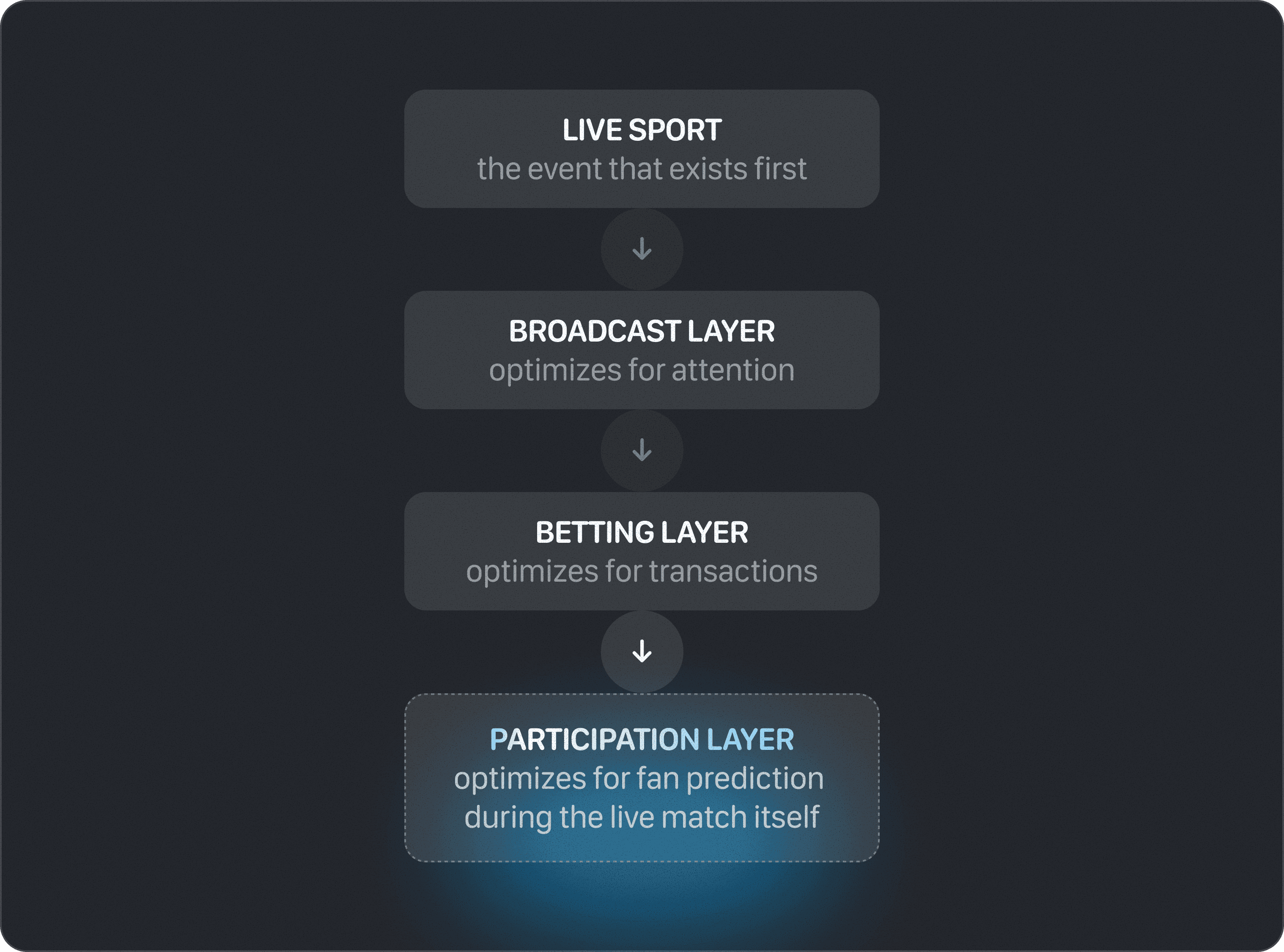
Yet most sports technology is not built around this core experience. Broadcast platforms optimize for attention and advertising. Sports media optimizes for highlights and content consumption. Betting platforms optimize for transactions. What remains largely unexplored is the instinct that sits at the center of watching sport: prediction.
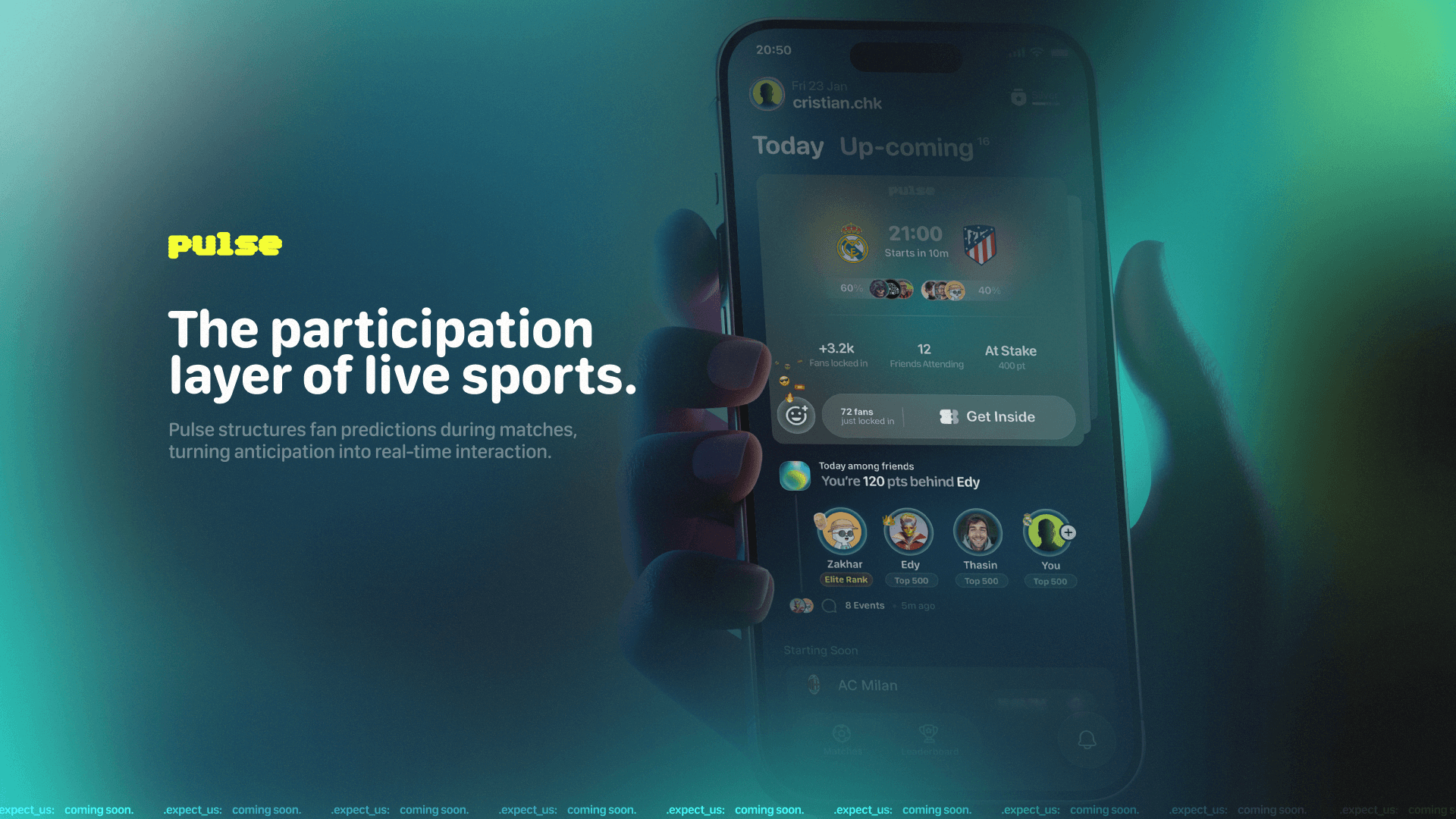
This paper explores the idea that live sports are ready for a new technological layer. A participation layer where fans interact with matches in real time by anticipating moments, making predictions, and competing around their understanding of the game.
Advances in real-time match data and AI interpretation systems now make it possible to structure this behavior at scale. The result is a new category of sports products built not around content or betting, but around fan participation during the match itself.
From Consumption to Participation
Most sports products today optimize for consumption. Fans watch highlights, scroll feeds, follow commentary, or place bets.
But the real cognitive activity of watching sport happens elsewhere. Fans constantly anticipate what will happen next, debate decisions, and form predictions about how the match will unfold.
The participation layer introduces a different model. Instead of optimizing for passive viewing, it structures this instinct into real-time interaction. Fans compete with friends and communities by predicting moments during the match itself.
The result is a new form of engagement: competition between fans around their understanding of the game.
Read the research behind Pulse